

Posted On: June 06, 2026
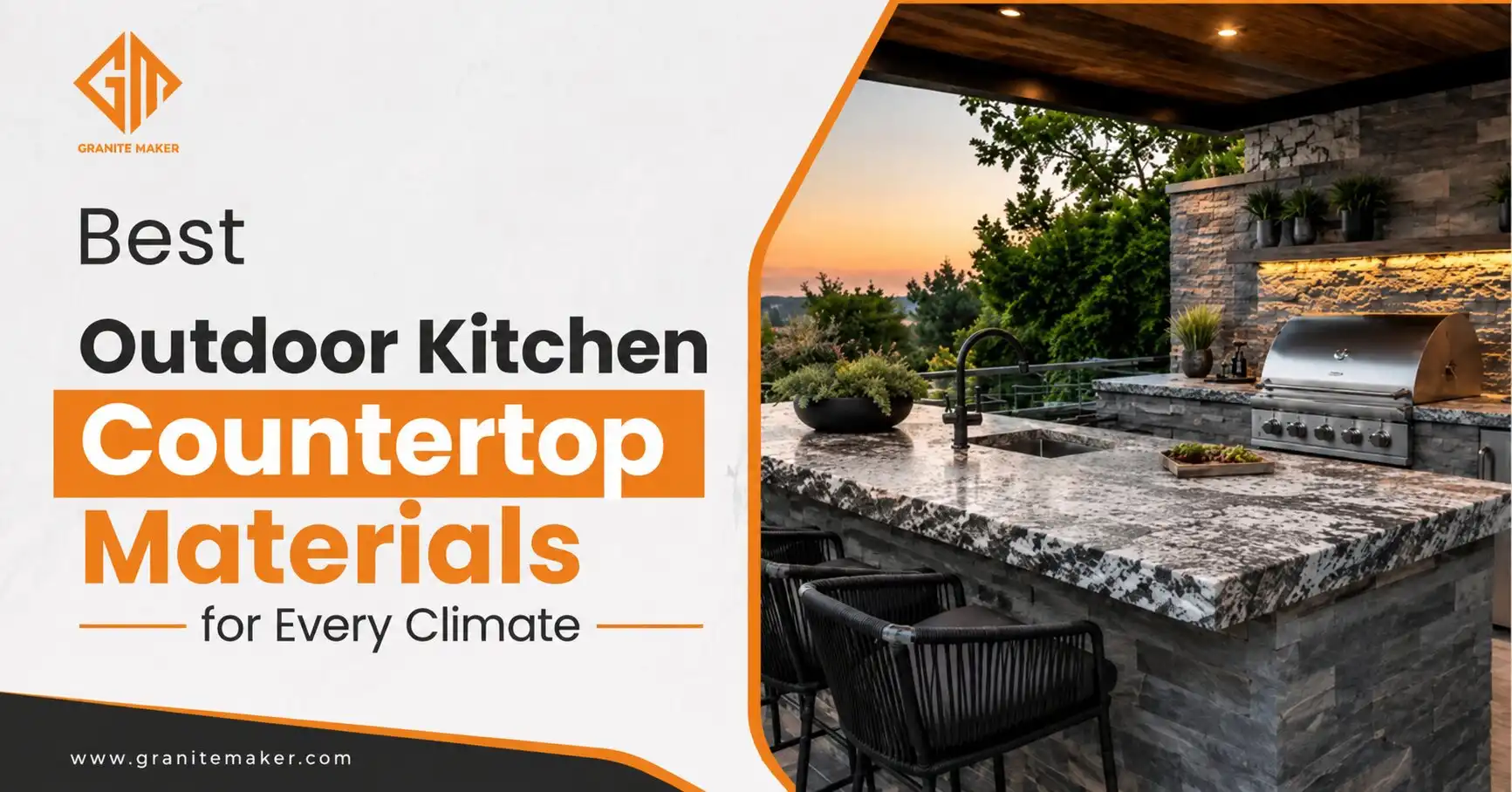
Best Outdoor Kitchen Countertop Materials for Every Climate
An outdoor kitchen isn't just an indoor kitchen moved outside. The cooking is similar, but the conditions are a completely different story.
Indoors, a countertop handles heat, spills, and daily wear. Outdoors, it faces UV exposure that fades certain materials within a season, freeze cycles that force water into porous stone until it cracks, and humidity that quietly breaks down surfaces not built for it. The wrong material doesn't just look bad after a few years — it costs money to fix and disrupts a space you've invested in.
Outdoor kitchen countertops take on far more than most homeowners expect when planning the build. Climate, stone density, porosity, UV resistance — these factors determine whether a surface lasts a decade or needs replacing in two. This guide breaks down which materials hold up across different climates, what to avoid, and how to make a choice that actually serves your outdoor space long-term.
Why Climate Drives the Decision
Most homeowners focus on aesthetics first. That's understandable. But outdoor surfaces answer to weather before they answer to style.
A few things worth knowing:
- Intense sun bleaches and discolors certain materials within one season
- In cold climates, water gets into porous stone, freezes, then expands — that's where cracks begin
- Coastal air carries salt, which accelerates surface wear on both metals and softer stones
- High-humidity regions speed up staining on anything left unsealed
Before settling on a material, think about what your countertop needs to survive year-round.
Granite: Dependable Across Most Climates
Granite is dense, heat-resistant, and hard. It doesn't flex under temperature swings, and a sealed slab resists moisture and food staining well. For outdoor kitchens in humid or semi-humid regions, it consistently outperforms softer stones.
Homeowners investing in Granite Countertops in Virginia get the added benefit of a material suited to the local climate. Virginia summers run hot and humid. Winters bring occasional freeze-thaw cycles. Softer or more porous surfaces wear down fast under those conditions. Granite handles all of it with very little upkeep — a reseal every year or two keeps it in good shape.
A few practical reasons granite countertops stay popular for outdoor builds:
- No two slabs look alike, so each outdoor kitchen ends up with its own character
- Wide color range fits both modern and traditional patio designs
- Holds up under direct heat from grills and smokers
- Low maintenance compared to marble or limestone
Porcelain: Low Maintenance, High Performance
Porcelain doesn't always get the credit it deserves. For outdoor use, it's genuinely one of the stronger options available.
It's UV-resistant, non-porous, and requires no sealing. Moisture doesn't penetrate it. Freeze cycles don't damage it the way they damage natural stone. In high-sun regions, it holds color better than most alternatives.
After a long cooking session, cleanup is quick. There's no need to worry about surface bacteria from open pores. For homeowners who want strong performance without regular maintenance, porcelain deserves serious consideration.
Quartzite: Cold-Climate Strength With a Refined Look
Quartzite is a natural metamorphic rock. It's harder than granite, denser than marble, and handles freeze-thaw cycles better than most stones. For outdoor kitchens in colder northern climates or higher elevations, it's worth looking at seriously.
It also has the dramatic veining that marble lovers appreciate — without marble's maintenance demands. If the outdoor kitchen is part of a larger, well-designed patio space, quartzite adds strong visual presence.
One note: quartzite is often confused with engineered quartz. They're completely different materials. Quartzite is natural. Engineered quartz, on the other hand, contains resin binders that break down outdoors.
Materials to Skip for Outdoor Use
A few common choices that tend to disappoint outdoors:
- Engineered quartz – Resin binders degrade under UV exposure. Surfaces yellow and fade over time
- Laminate – Particleboard core warps quickly in wet or humid conditions
- Marble – Porous, soft, and prone to staining. Better suited for indoor applications
- Unsealed limestone – Stains easily and absorbs moisture that leads to surface damage
Matching Material to Climate
Outdoor kitchen countertops aren't a one-size-fits-all product. The right material depends on where you live.
- Hot and humid climates: Granite or porcelain both perform well
- Cold climates with freeze-thaw cycles: Dense granite or quartzite with sealed edges
- High-sun areas: Porcelain holds UV stability better than most
- Coastal areas with salt air: Porcelain or sealed soapstone — skip untreated metals
A good fabricator will factor your local climate into the recommendation before you pick a slab.
The Team Behind Your Next Outdoor Surface
Granite Maker is a family-owned fabrication and installation company in Fredericksburg, Virginia. The business has operated since 1975 and covers every step in-house — from stone selection and templating to final installation. No subcontracting. No guesswork on fit or quality.
The showroom carries over 1,000 stone colors, including granite countertops, quartzite, marble, porcelain, and soapstone. Homeowners looking for Granite Countertops in Virginia will find an experienced team that understands local climate conditions and guides material selection accordingly. Granite Maker offers free consultations, professional installation, and a one-year workmanship warranty.
Your outdoor kitchen deserves a surface built to last. Let's find the right one. Start With a Free Consultation or call (540) 940-6998.
Frequently Asked Questions
- Can I use the same countertop material outdoors as I have in my kitchen?
Not always. Resin-based materials like engineered quartz degrade under UV exposure outdoors. Natural dense stone — granite, quartzite, or porcelain — handles outdoor conditions far better than most indoor-grade materials.
- How often does outdoor granite need to be resealed?
Once every one to two years, depending on sun exposure and use. A covered outdoor kitchen may go a bit longer between sealings. Regular sealing keeps moisture and staining agents from working into the stone.
- Is porcelain strong enough for an outdoor kitchen countertop?
Yes. Modern porcelain is dense, UV-stable, and rated for outdoor use. It handles heat and cold without absorbing moisture. For low-maintenance outdoor setups, it's one of the better picks available.
- What countertop material works best in climates with harsh winters?
Quartzite and dense sealed granite both perform well in freeze-thaw conditions. Both absorb very little water, which reduces the risk of cracking when temperatures drop. Avoid porous stones like marble or unsealed limestone in these climates.
Article Author

Arobit
Blog Admin
Tags
Latest Posts
-

How to Care for Your Granite, Quartz, and Marble Countertops Long-Term
-

Best Bathroom Vanity Tops for Fredericksburg, VA Homes
-

Which Granite Countertop Thickness Should You Choose: 2 cm or 3 cm?
-

Upgrade Your Outdoor Space with Natural Stone Kitchens
-

Granite Countertops for Historic Homes in Fredericksburg VA
Similar Posts
-
How to Care for Your Granite, Quartz, and Marble Countertops Long-Term
-
Best Bathroom Vanity Tops for Fredericksburg, VA Homes
-
Which Granite Countertop Thickness Should You Choose: 2 cm or 3 cm?
-
Upgrade Your Outdoor Space with Natural Stone Kitchens
-
Granite Countertops for Historic Homes in Fredericksburg VA
© 2025 Granite Maker. All rights reserved.
Do not copy any content (including images) without consent.